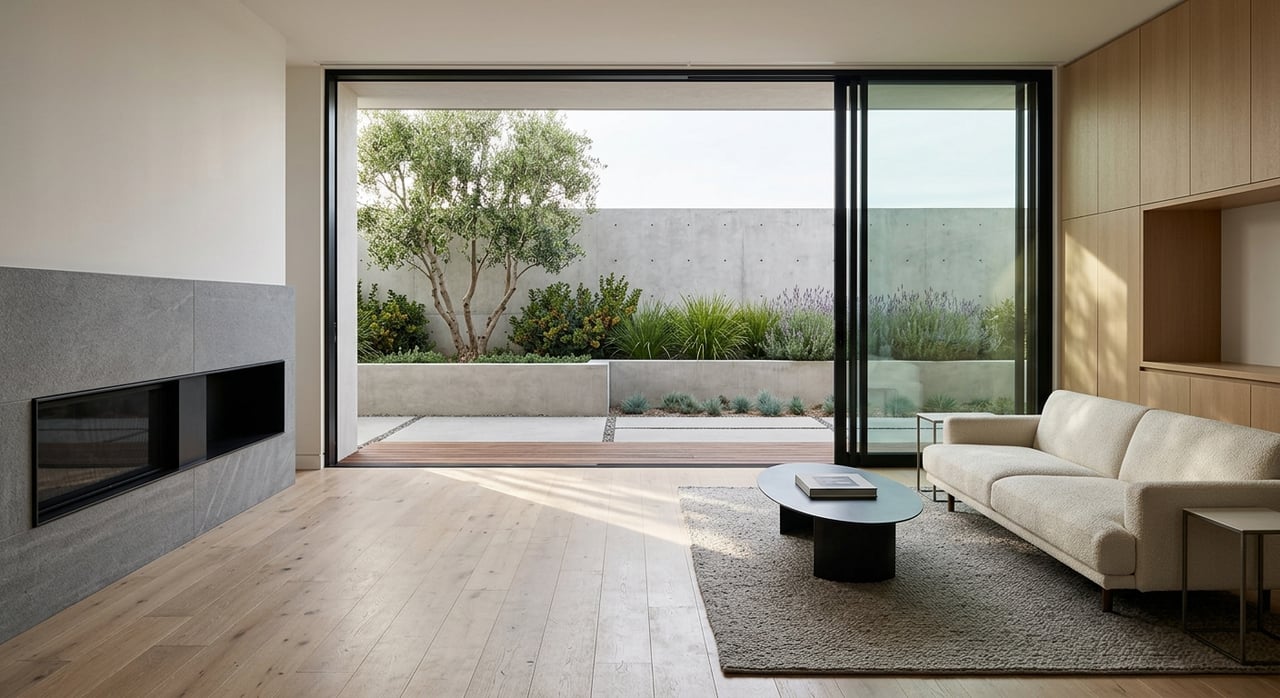
How Agents Determine Market Value For Palo Alto Homes
July 9, 2026
July 9, 2026
Wondering why one Palo Alto home sells in days with multiple offers while another, similar on paper, lands at a very different price? If you are buying or selling here, it helps to know that market value is not a guess, a tax number, or an online estimate. It is a data-driven opinion shaped by recent sales, neighborhood context, and the details buyers respond to most. Let’s take a closer look at how agents determine market value for Palo Alto homes.
Market value is best understood as the most probable price a home should bring in a competitive open market. That estimate assumes the property has had reasonable exposure and that both buyer and seller are acting knowledgeably and prudently.
That matters because market value is not the same thing as assessed value. In California, property taxes are based on assessed value under Proposition 13 rules, so the number on your tax bill may be very different from what your home could sell for today.
It also is not the same as an online estimate. Automated tools can be useful as a starting point, but even Zillow states that its Zestimate is not an appraisal and depends on the data available to its model.
Most agents begin with a comparative market analysis, often called a CMA. This is a structured review of recent closed sales, along with active listings and pending sales, to understand where a home fits in the current market.
Closed sales usually carry the most weight because they show what buyers actually paid. Active and pending listings help round out the picture by showing current competition and where buyer demand may be heading.
The goal is not to find homes that are merely nearby. The goal is to find the best comparable properties, often called comps, that match the subject property as closely as possible.
The strongest comps are similar in location, size, condition, and features. Agents also look at timing, because a sale from months ago may need adjustment if the market has shifted.
A good comp might match your home in square footage, lot size, layout, renovation level, and overall appeal. If it differs in meaningful ways, an experienced agent will make thoughtful adjustments rather than treating the sale price as a simple plug-in number.
This is one reason two homes with similar square footage can have noticeably different values. Buyers are often responding to a mix of factors, not just size.
Palo Alto is not one uniform market. It behaves more like a collection of micro-markets, and that is one of the biggest reasons local pricing expertise matters.
Recent data shows just how wide the spread can be. Over the three months ending May 2026, Redfin reported a median sale price of about $9.1 million in Old Palo Alto, compared with about $2.9 million in University South and about $2.7 million in Charleston Meadow.
That kind of range means a comp from the wrong neighborhood can distort value quickly. Even if two homes look similar online, they may compete in very different buyer pools based on location, housing type, lot characteristics, and price tier.
A value opinion can drift off course when an agent reaches too far for sales or relies on homes that are only loosely similar. A house in one Palo Alto area may attract different expectations around lot size, privacy, architectural style, or renovation quality than a house in another.
That is why neighborhood-level judgment matters so much in this market. The best pricing work is not just about pulling data. It is about choosing the right data.
Recent Palo Alto market data also shows why timing and strategy matter. Over the three months ending May 2026, Redfin reported a median sale price of $3.6 million, about 12 days on market, and roughly three offers per home.
Zillow reported a median 11 days to pending, a median sale-to-list ratio of 1.050, and 71.3% of sales closing over list price. In practical terms, that suggests a market where well-positioned homes can move quickly and often attract strong buyer competition.
Still, these are broad market signals, not a shortcut to pricing any one property. Your home’s likely value depends on how it compares to the right subset of recent sales.
Price per square foot is a helpful reference point, but it should not be the main pricing method. Redfin placed Palo Alto’s median sale price per square foot at about $2.09K, yet that figure is only one piece of the story.
Two homes with the same square footage can command very different prices if one has a better layout, more natural light, a larger lot, updated finishes, or a more desirable setting within its immediate market area. Buyers do not purchase square footage in a vacuum.
Once agents identify likely comps, they adjust for the differences that buyers care about most. This is where pricing becomes both analytical and highly local.
Common value factors include:
A thoughtfully updated home may compete very differently from a similar-sized home that needs work. In the same way, an efficient floor plan or strong indoor-outdoor flow can influence buyer demand beyond what a spreadsheet alone would suggest.
Condition is not just about whether a home is old or new. It is also about presentation and how clearly buyers can see the home’s strengths.
Research cited by NAR in its 2025 staging survey found that 29% of agents saw staging increase the dollar value offered by 1% to 10%, while 49% said it reduced time on market. That does not mean every home needs the same preparation plan, but it does show that presentation can influence both price and pace.
For sellers in Palo Alto, that can translate into real strategy decisions. Professional photography, thoughtful preparation, and polished marketing can help buyers understand a home’s value more quickly.
It is common for two agents to give different opinions of value. That does not always mean one is right and the other is wrong.
Different value opinions often come down to different comp selections, different time windows, and different assumptions about adjustments. One agent may put more weight on a very recent sale, while another may emphasize a slightly older sale that is more similar in condition or lot characteristics.
Pricing strategy can also play a role. Market value is an estimate of likely sale price, while list price is a strategic decision based on your goals, timing, and market conditions.
This distinction is important if you are preparing to sell. A home’s estimated market value helps establish a likely range, but the asking price is a separate decision.
Some sellers choose a more competitive list price to encourage activity and speed. Others may test a higher asking price if they have more time and want to see how the market responds.
In a market like Palo Alto, where many homes are selling quickly and often over list, strategy matters just as much as the baseline valuation. The right plan depends on your property, your timing, and the kind of response you want to create.
If you have checked your Zestimate or your county assessment, you have already seen how different these numbers can be. That can be confusing, especially in a fast-moving market.
Online estimates rely on models, public records, MLS data, home facts, location, and broader market trends. They can be directionally useful, but they cannot fully account for nuances like renovation quality, privacy, floor plan flow, or the value impact of being in one Palo Alto micro-market instead of another.
Assessed value serves a different purpose entirely. In Santa Clara County, assessed value is tied to property tax rules and can differ significantly from live market value.
If you are a seller, accurate market value analysis helps you decide how to prepare, price, and position your home. It can shape everything from timing to marketing to negotiation strategy.
If you are a buyer, understanding how agents evaluate value can help you make stronger offers and recognize when a home is priced in line with the market. In a competitive area like Palo Alto, that clarity can save time and reduce second-guessing.
The common thread is this: market value is not a fixed label. It is an informed opinion built from evidence, filtered through local context, and refined by experience.
When you want a pricing conversation grounded in current Palo Alto data and neighborhood-level judgment, Kathleen Pasin offers the kind of tailored, high-touch guidance that helps you move forward with confidence.
Stay up to date on the latest real estate trends.



Her expertise in real estate ensures that you receive informed and objective guidance. Contact Kathleen to learn how she can assist you in meeting your real estate needs.
KATHLEEN PASIN | CA DRE# 01396779
[email protected]
(650) 450-1912
ADDRESS
3000 El Camino Real
Palo Alto, CA 94306