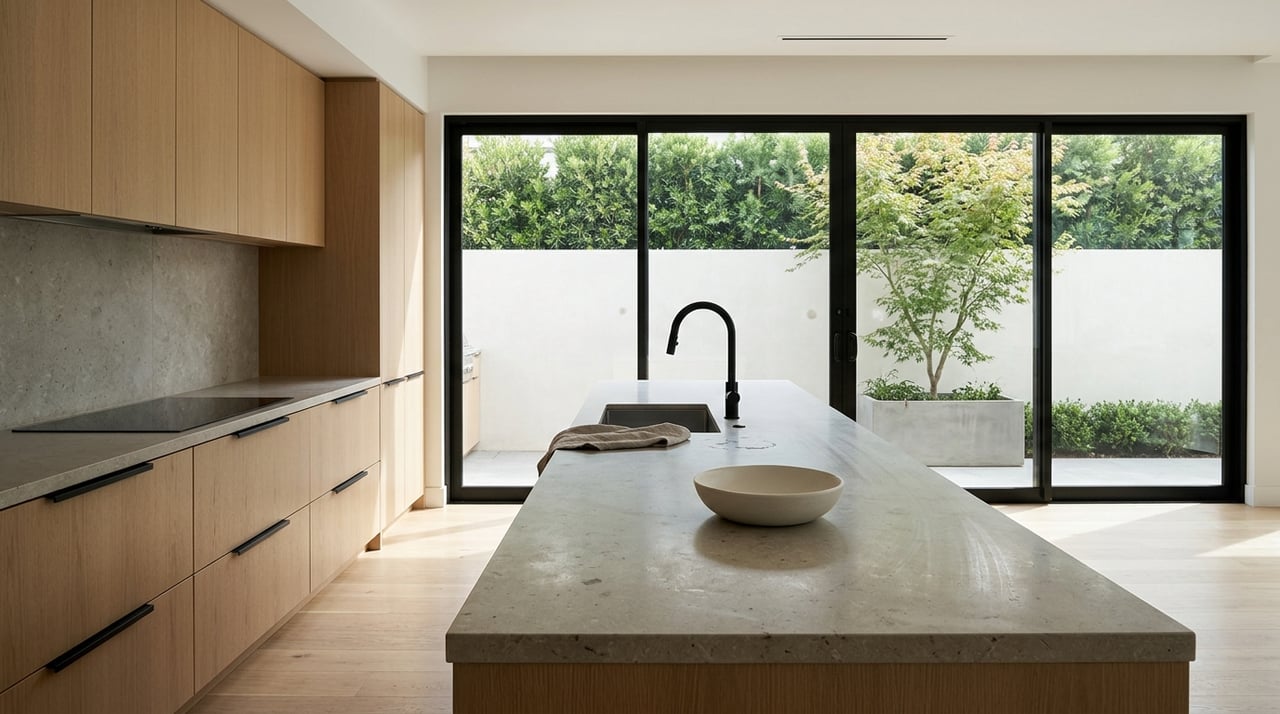
A Guide to Palo Alto Luxury Price Brackets
June 4, 2026
June 4, 2026
Wondering why one Palo Alto home is priced near $2 million while another a few streets away is listed above $7 million? You are not alone. In a city with more than 30 neighborhoods, fast-moving inventory, and a wide range of property types, price brackets can feel confusing at first glance. The good news is that once you understand how Palo Alto’s market tends to organize itself, you can make much better sense of what your budget buys and how to position your next move. Let’s dive in.
Palo Alto is best understood as a collection of micro-markets rather than one uniform market. The city’s comprehensive plan refers to 35 neighborhoods, and current market data shows a typical home value near $3.68 million, with median sale prices around $3.14 million to $3.48 million. Homes are also going pending in about 11 to 12 days, which tells you the market can move quickly.
That is why price brackets are helpful, but only as a working guide. They are not fixed categories. In a market where many homes still sell above list price, the bracket gives you a starting point for understanding product type, location tendencies, and buyer expectations.
The clearest way to think about Palo Alto is as a mid-$3 million city with several broad tiers. These tiers are shaped by home type, lot size, condition, street placement, and neighborhood pattern.
At this level, you will usually find condos, townhomes, and the smallest or least-updated houses. Buyers in this range are often balancing tradeoffs around square footage, lot size, finishes, or location.
Current examples in Palo Alto include listings and sales such as 4159 El Camino Way Apt M at $949,000, 200 Sheridan Ave Apt 407 at $1.29 million, 500 Fulton St Apt 105 at $1.39 million, and 2110 Bowdoin St sold at $1.90 million. This range often appears in lower-priced city pockets like Evergreen Park, Downtown North, University South, and Ventura, as well as condo clusters in 94301 and 94306.
This is the broadest family-home band in Palo Alto. You will often see two- to four-bedroom houses, classic ranch homes, cottages, townhomes, modest remodels, and some newer infill construction.
Neighborhoods commonly associated with this tier include Midtown, Barron Park, College Terrace, Palo Verde, and Southgate. Recent examples include 941 College Ave sold at $3.13 million, 785 La Para Ave sold at $3.31 million, 837 Sutter Ave sold at $3.50 million, and 2311 Princeton St sold at $4.20 million.
This band tends to include larger remodeled homes, custom rebuilds, and homes with stronger lots or more architectural presence. You may also see additional bedrooms, dedicated office space, guest accommodations, and more substantial updates.
Professorville, Crescent Park, Old Palo Alto, Duveneck-St. Francis, and Community Center often show up in this upper-middle to luxury family tier. Examples include 2050 Williams St sold at $4.36 million, 771 Barron Ave sold at $5.40 million, 957 Clara Dr sold at $6.42 million, and 595 Seale Ave listed at $6.50 million.
This is Palo Alto’s trophy tier. Here, square footage still matters, but street appeal, lot quality, privacy, architecture, and scarcity can matter just as much.
Old Palo Alto and Crescent Park show the strongest concentration of homes in this range, though downtown can also produce rare ultra-luxury condo offerings. Current examples include 4000 Manzana Ln sold at $7.20 million, 763 La Para Ave sold at $7.43 million, 618 Tennyson Ave listed at $10.88 million, 2001 Bryant St listed at $24 million, and 102 University Ave #3A-3B-3C listed at $18.5 million.
While exact prices shift with market conditions, Palo Alto neighborhoods still form a recognizable market structure. Looking at neighborhood-level patterns can help you understand why prices cluster the way they do.
Old Palo Alto, Crescent Park, and Professorville sit in the city’s premium core. Current Zillow neighborhood values place them in the mid-$5 million range, including about $5.39 million for Old Palo Alto, $5.72 million for Crescent Park, and $5.65 million for Professorville.
These neighborhoods often attract attention because they combine strong location identity with a wide spread of high-end inventory. Even so, they are not uniform. Old Palo Alto and Crescent Park can include everything from lower-priced condos or smaller homes to very large estates, which is a useful reminder that even the top tier contains sub-markets.
Midtown, Barron Park, College Terrace, Palo Verde, Southgate, Duveneck-St. Francis, and Community Center form the broad middle ring. This is where buyers often compare condition, lot size, and remodel quality more closely than pure prestige.
Current neighborhood values support that middle-band role. Midtown is around $3.66 million, Barron Park about $3.83 million, and College Terrace about $3.17 million. These areas can still produce homes well above those averages, especially when a property has a larger lot, newer construction, or a more distinctive design.
Downtown North, University South, Ventura, and Evergreen Park help anchor the entry side of the Palo Alto market. Current neighborhood values include about $2.27 million in Downtown North, $2.55 million in University South, $2.55 million in Ventura, and $1.49 million in Evergreen Park.
These areas are more likely to include condos, smaller homes, or a more mixed housing stock. For buyers, that can create a more accessible entry point into Palo Alto, even though the options and price points can vary a lot from one block or building to another.
This is one of the most common questions in Palo Alto, and it is a smart one. Two homes with similar bedroom counts can land in very different price brackets because buyers are not just paying for room count.
In Palo Alto, lot size, street placement, remodel level, and whether a home is new construction can all have a major effect on value. Barron Park offers a clear example. Recent three-bedroom sales there have ranged from about $2.5 million to $3.3 million, while larger homes on stronger lots have sold from about $5.4 million to more than $7.4 million.
That range is why a citywide median only tells part of the story. It is useful for context, but it cannot fully explain the value of a specific home in a specific pocket of Palo Alto.
Not necessarily. Condos often provide the lowest visible entry price in Palo Alto, with current inventory spanning roughly $949,000 to $1.8 million in many cases. But the condo category is not always entry-level.
Palo Alto also has rare luxury condo product. A current downtown example is 102 University Ave #3A-3B-3C at $18.5 million. That kind of outlier makes an important point: in Palo Alto, property type alone does not define the bracket.
If you only look at one citywide median, you miss the real structure of the market. Zillow neighborhood values currently range from about $1.49 million in Evergreen Park to about $5.72 million in Crescent Park, and active citywide inventory is only about 97 homes.
With limited inventory and a competitive pace, each new listing can influence how the market feels in the moment. That is why the best way to read Palo Alto is through a ladder of product types and neighborhood tendencies, not a rigid pricing grid.
Price brackets are most useful when you treat them as planning tools. They can help you set expectations, compare options, and understand what features tend to drive value at each level.
If you are buying, the bracket helps you decide where to compromise and where to hold firm. If you are selling, it helps you understand which buyers are most likely to respond to your home and how your property fits into the current neighborhood context.
A practical way to use Palo Alto brackets is to focus on these questions:
In a market this layered, local interpretation matters. A price band can point you in the right direction, but neighborhood-level insight is what helps you price or purchase with confidence.
If you want help making sense of where a specific home or neighborhood fits within the Palo Alto market, Kathleen Pasin offers thoughtful, concierge-level guidance rooted in deep local knowledge.
Stay up to date on the latest real estate trends.


Her expertise in real estate ensures that you receive informed and objective guidance. Contact Kathleen to learn how she can assist you in meeting your real estate needs.
KATHLEEN PASIN | CA DRE# 01396779
[email protected]
(650) 450-1912
ADDRESS
3000 El Camino Real
Palo Alto, CA 94306